UNLIMITED ACCESS TO OVER 400 HISTORIC PLACES
Live and breathe the story of England at royal castles, historic gardens, forts and defences, world-famous prehistoric sites and many others.

The era between the end of Roman rule in Britain in about AD 410 and the Norman Conquest in 1066 is one of the most momentous in English history. It was a period that saw Britons, Anglo-Saxons and the Vikings struggle for dominance, and the eventual emergence of a unified kingdom of England.
Follow the links below to explore the complex history of this period and to discover the early medieval sites that English Heritage cares for.

Discover how a decision was made at Whitby Abbey in AD 664 that became a landmark in the history of Christianity in England.

A devastating Viking attack on the church of St Cuthbert in 793 sent a shockwave through Europe. How did a Christian community at Lindisfarne survive?

Read the story of how the chance discovery of a chapel in Gloucestershire has proved crucial to our understanding of Anglo-Saxon architecture.

Harold’s brief reign was dominated by defending England from invasion. How did it unfold, and did he really march 200 miles from Yorkshire before the Battle of Hastings?

Learn about the monk from Rome who became the first Archbishop of Canterbury and kick-started the Anglo-Saxons’ conversion to Christianity.

In 597, St Augustine arrived in England to convert the Anglo-Saxons to Christianity. How important was Queen Bertha of Kent, who was already a Christian, in his mission’s success?

St Hadrian of Canterbury played a pivotal role in the early history of the English Church. Read about his journey to England from Africa and about his enduring legacy.

As abbess of Whitby in the 7th century – a ‘double monastery’ for both nuns and monks – Hild led one of the most important religious centres in the Anglo-Saxon world.

How Cædmon’s poetic awakening, at the monastery that lies beneath Whitby Abbey, produced one of the first fragments of English verse.
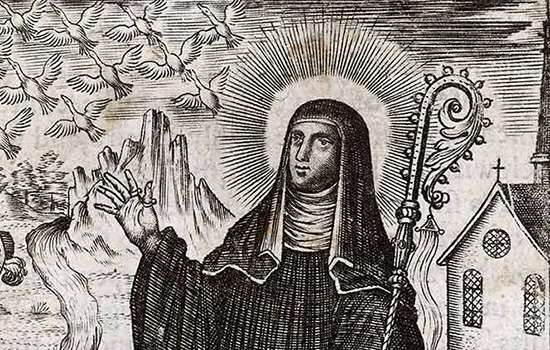
Find out what we know about St Milburga, Anglo-Saxon princess, abbess and miracle worker, who ruled over a community of both monks and nuns at Wenlock in Shropshire.

People have very different ideas of what ‘Celtic’ means. We explore the complex history behind Celtic culture and its legacy in the present day.

The Vikings had a profound impact on the history of England. Who were they, and how and why did they come to these shores in the first place?

This period saw the evolution of a nation of warlords into a country organised into distinct kingdoms, eventually unified into the kingdom of England.

Although Christianity in Britain tends to be associated with the arrival of St Augustine in 597, it had in fact already taken root in Roman Britain.

The early medieval period produced many examples of highly distinctive art of world-class significance.

Most early medieval buildings were constructed mainly using wood, a tradition which left its mark on later stone-built churches.


Listen to these podcast episodes to learn more about some of our early medieval sites and the collections and people associated with them.
Discover more podcasts here


